
Thanks for being here! I am a full-time freelance sports writer. Paid subscriptions to this newsletter allow me to dedicate more time to this work, including hiring an editor to help me with longer, more involved posts. Paid subscriptions get you access to all the written content, and there are also paid tiers that provide access to the Out of Your League Discord community and our Zoom events, including our book club. I’d appreciate if you could support this 100% reader-funded newsletter. Upgrade here:
Today’s post is a quickly-written, rough rant to go alongside your viewing of the Heated Rivalry season finale. To read my other Heated Rivalry and queer hockey content from the last couple weeks: Was ‘Heated Rivalry’ Failed By Its Publisher?; Who Deserves a Redemption Narrative?; An Interview with Former Pro Hockey Player Harrison Browne on his Role in ‘Heated Rivalry’; and An Interview with Sapphic Woho Romance Writer Kate Cochrane
sorry but I don't give a fuck that the NHL has embraced 'heated rivalry'
As we’ve already noted here at this newsletter, Heated Rivalry has taken over mainstream culture in a way few could have predicted (except queers, we’ve been telling folks for a long time that there is an audience for these stories, but I digress). It’s everywhere. Stars Hudson Williams and Connor Storrie have had their personal lives inappropriately interrogated and everyone wants a piece of the phenomenon—even the NHL. Yes, the men’s hockey world has also embraced the Heated Rivalry craze.
As Heated Rivalry sweeps North America during the heart of NHL season, the enthusiasm has entered the arenas. The Montreal Canadiens was the first team to acknowledge the show, playing an ad for the series during their Pride Night game against the Tampa Bay Lightning. The Boston Bruins played “All The Things She Said” during a game, a callback to the needle-drop-heard-round-the-world in episode four. Hockey bro podcasts like Empty Netters and What Chaos have been earnestly reviewing the show, getting emotionally invested in the narrative and the story being told about these two characters.

The NHL itself even put out a statement. “There are so many ways to get hooked on hockey and, in the NHL’s 108-year history, this might be the most unique driver for creating new fans,” a league rep told The Hollywood Reporter. “See you all at the rink.”
One of the most homophobic, anti-queer sports leagues in North America has decided that now is the time to welcome queer fans to watch their games and you’ll have to forgive me if I’m a bit cynical about the whole thing. THR erroneously states that the NHL has “in recent years has been trying to broaden its appeal to gay sports fans with LGBTQ-themed events and nights.” This is categorically false. In fact, the NHL has pretty swiftly rolled back its embrace of LGBTQ+ advocacy and Pride Nights in the last few years.

From a 2023 op-ed I wrote for CNN titled, “The NHL shows why there are so few openly gay athletes in men’s sports:”
“Tuesday [October 10] marked the beginning for the National Hockey League’s 2023-2024 season, just one day before National Coming Out Day. In a telling bit of insensitive timing, the league chose that day to affirm a new ban on Pride Tape — rainbow tape that goes around players’ hockey sticks that many players chose to use during warmups on Pride Night.
This new policy comes on the heels of both the NHL and Major League Baseball advising teams to halt the wearing of Pride-themed jerseys for team Pride Nights last season after some players expressed discomfort, saying the jerseys were against their religious beliefs. Some players refused to take part in warmups when their teams wore Pride Night jerseys; some Russian players or their teams have expressed concerns about those players running afoul of Russian anti-LGBTQ laws. The NHL called the jerseys “a distraction.”
That’s just two seasons ago. And while the NHL reversed Pride Tape the ban just a few weeks later, the damage to LGBTQ+ fans and their faith in the league was done. Even if teams are still having Pride Nights, they mostly ring hollow in the current political climate. As Brock McGillis, the first openly gay pro hockey player, told me last year, “I haven't seen one rainbow eradicate homophobia.” Franchise owners regularly donate money to anti-LGBTQ+ politicians while their teams don rainbow patches. Teams host Pride Nights while never speaking out about “Don’t Say Gay” laws, bathroom bans, or trans sports bans.
Sorry to cite myself again, but I wrote about this for Andscape back in 2022:
“As Pride Nights celebrate the visibility of the queer and trans community, we are being legislated out of existence and made to disappear from the public eye by our government. We are actively under attack, but you would never know that from the way sports leagues talk about Pride Month. They want cookies for allyship without acknowledging the reality of the community they are claiming as allies.”
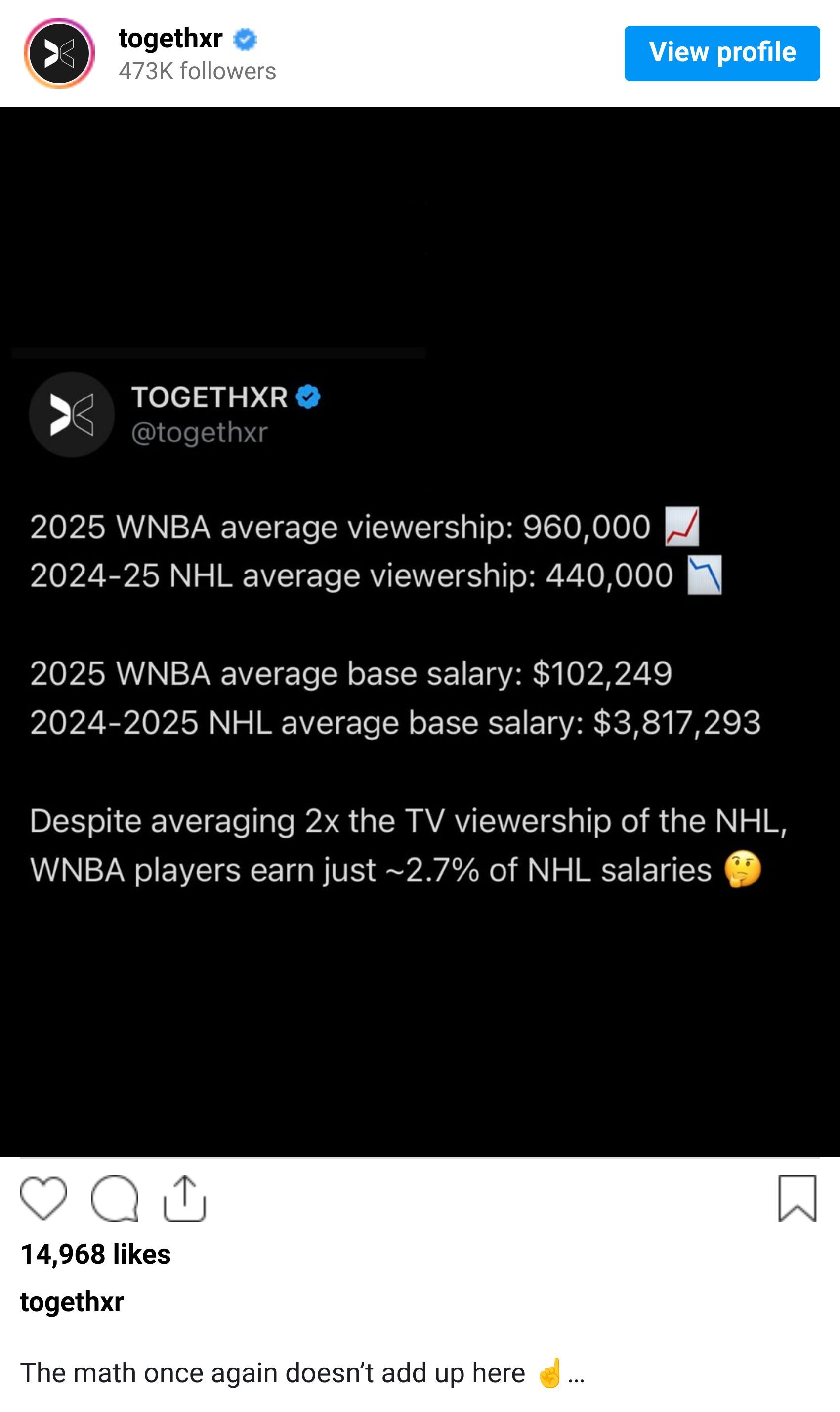
NHL ratings and viewership has been plummeting for a while. Last year, according to Awful Announcing, the league saw a 39% year-over-year decline for Opening Day viewership and drew a record-low audience for the Winter Classic. Games airing ESPN and TNT hovered around 200,000 viewers—an absolutely dismal number. But now that the LGBTQ+ community and their allies have demonstrated the power their dollar has, the NHL wants to invite them to games.
If they wanted to appeal to a wider audience in order to grow the sport, they could have done so long before a TV show made it impossible for them not to. But they’re cowards who feared that speaking up for LGBTQ+ people would cost them their audience, while ironically failing to realize that it might have actually grown it. This audience has been here the whole time, but the league has shown absolutely no interest in appealing to it at all.
This isn’t the first time recently that teams have made shallow attempts at co-opting queer culture to create a fun and engaging atmosphere. Last season, Chappell Roan’s “Pink Pony Club” became the anthem for the Edmonton Oilers’ playoff run. “We were out for dinner in San Jose,” former Edmonton Oilers checker Connor Brown said on the 100% Hockey podcast. “There is a girl who is playing on the piano and she started signing ‘Pink Pony Club’ and all the boys were bobbing their heads and we needed a new ‘win’ song. And so we were like, ‘Oh, this song is good.’ We all hadn’t heard it. We won the next game, put it on after the game and that was it.”
And while some queer fans likely felt a kinship thanks to the team’s embrace of the song, many others were bothered by it. A group of (all or mostly) cishet male athletes adopted a song that is literally about feeling a sense of belonging in a gay club—and then refused to even answer questions about why they had chosen it, which we now know was due to superstition but at the time felt pretty homophobic. But queer people have always been drivers of culture, only to see it co-opted by mainstream, straight people and the queer roots of those things erased (see also: Black people’s influence on popular culture). For what it’s worth, I felt similarly when MLB teams adopted Robyn’s “Dancing on My Own” as their victory song.)
Do I hope that the Heated Rivalry effect will be one that begins the painstaking process of rooting out homophobia from the sport of hockey? Of course I do. But it’s going to take a real cultural change and an investment in the LGBTQ+ community that continues way after the hype from the gay hockey show has died down. Celebrating elements of queer community without actually celebrating and supporting the community itself isn’t worth shit. Especially not when members of our community are dying and being legislated out of existence by the current administration.
